Archived entries for General Interest

Family and fireflies: preserving land in La Crosse County

The donation of a recent conservation agreement between Sue Strehl and Mississippi Valley Conservancy comes from a longing to protect the land that made Sue who she is today.

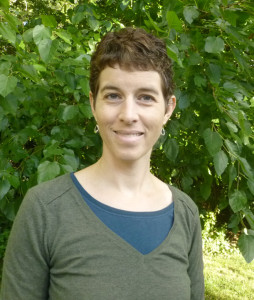
Sue and her dog at the farm.

Sue and her dog at the farm.

On a 100-acre farm plot in the Town of Shelby, fond memories of family and fireflies were formed for Sue Strehl. This farm has been in Sue’s family for 99 years and was established in 1914 when Sue’s grandparents, the Neidercorns, purchased the first 60 acres. The farm was used for a dairy operation, growing potatoes, and for a short time, growing tobacco.

Sue has many fond memories of the land; in an interview she recalled one night where she took off exploring, “I had hiked to the back 40 one evening [and] I was standing there as it got dark, just enjoying the sounds of nature. As the last traces of the sun’s glow disappeared from the sky, the valley in front of me filled with more fireflies than I had ever seen. I was awestruck.”

Because the land has been with her family for nearly a century Sue says she wants to protect it so that the “future owners of the land… get the same joy from the property as my family has experienced.”

The rolling hills of the Strehl Farm.

The rolling hills of the Strehl Farm.

Mississippi Valley Conservancy is overjoyed that they will be able to help Sue and her family protect this beautiful land from development and mining while still allowing the property to stay under the private ownership of Sue’s Family.

Reflecting on the conservation agreement, Tim Jacobson, the Conservancy’s executive director, said “Caring for the farm in this lasting way is the true embodiment of the ‘land ethic’ that Wisconsin conservationist Aldo Leopold wrote about.”

Stewardship begets salamanders, clean water

A special thank you to John Torinus, who so eloquently states the importance of the Stewardship Program in this post, which originally appeared on his blog, johntorinus.com.

spotted-salamander“Doctor Herp” called about 6 p.m. on a cold and rainy night recently and asked if we wanted to check out salamander matings in an ephemeral pond on a choice piece of Kettle Moraine land.

I declined and headed for the hot tub, but my wife Kine, educated as a biologist and a hugger of all species, said yes. She donned her waders and joined Gary Casper, the state’s best-known herpetologist, for what they considered an ideal outing.

They happily reported that the wet spring had a positive effect on biological processes and that there will be an abundance of small herptiles later in the season.

Of note, the property is owned by the Cedar Lake Conservation Foundation and was purchased with a grant from the Wisconsin Stewardship Fund. Critics of conservation efforts may sneer at the preservation of friendly environs for salamanders, but they are misguided. If the salamanders, toads and frogs are in trouble, we are in trouble, too.

Let us count the ways that preserved lands and the Stewardship Fund make a difference in our lives:

• Hundreds of cross country skiers use the same land east of Big Cedar Lake during the winter months on trails groomed by volunteers from the Fox Hill Nordic Ski Club. They make for a healthier community.

• Even more hikers, birders and dog walkers use the trails in the other three seasons. Open access is guaranteed under Stewardship rules.

• The ephemeral ponds allow for slow absorption of rain and snow melt back into the underlying aquifers and filter the run-off to Cedar Creek, the Milwaukee River and eventually Lake Michigan. Those would be our drinking waters.

• Any absorption upstream reduces flooding downstream.

• The lands surround Fox Hill, one of the finest kames in the Kettle Moraine, thus protecting its scenic contribution to our county.

This encounter with the salamanders may not seem pivotal in the grand affairs of mankind, but it embodies some larger issues that we need to be thinking about. And it is a timely issue because a group of accounting types in the Republican Part have raised the possibility of deleting all the funds for the Stewardship program.

The fund, which was created by bipartisan cooperation between Democratic Gov. Gaylord Nelson and Republican Gov. Warren Knowles, has spawned the creation of 55 land trusts in Wisconsin. These trusts, along with other organizations like Trout Unlimited, Pheasants Forever and The Nature Conservancy, have been providing the matching funds to protect lands that can be used for hunting, fishing, hiking, skiing and all manner of recreation.

One of the most active has been the Ozaukee Washington Land Trust, which has protected more than 5000 acres, much of it along the banks of the Milwaukee River. Along with funds for absorption areas from the Department of Natural Resources and the Metropolitan Milwaukee Sewer District, Stewardship dollars have mitigated downstream flooding. That indirectly helps to cut raw sewage outflows into Lake Michigan.

The Republicans cut the funding for Stewardship from $83 million to $60 million for the very tight 2011-2013 budget. It was necessary because of the huge deficit entering that biennium. But the economy is stumbling to higher ground, so the austerity argument no longer applies. (In comparison, the Republicans in Madison are dumping more than $600 million in new dollars into the under-managed Medicaid program.)

Meanwhile, we’re not doing so hot when it comes to protecting our natural resources. West Bend is down to 700 feet for drinking water; it was 50 feet in the old days. Germantown is drilling down to 1200 feet. And Waukesha’s wells are sucking radon. A lot of municipalities are considering a default to Lake Michigan water.
Lake Michigan levels are at all time lows.

And Milwaukee Riverkeepers gave the Milwaukee River Basin a Grade “D.”

Here’s are pieces of the assessment: “Generally, turbidity readings in the two watersheds (Kinnickinnic and Menomonee) were very poor; dissolved oxygen and chloride grades were only mediocre; and both received failing grades for phosphorous, conductivity and indicators of bacteria.”

As for the Washington County parts of the assessment, “The Milwaukee River Watershed, consisting of the North Branch, East and West Branch and South Branch watersheds. as well as the Cedar Creek sub-watershed, dropped from a B- to a C in 2011. “ Some of the metrics were OK, but the whole watershed received an “F” for conductivity, phosphorous and bacteria.
Filtration helps all of those issues, which is why the land trusts have been accepting easements and buying lands along the riverbanks.

I have always had a hard time figuring out why conservatives in the GOP have gone anti-conservation. Conserving valuable resources, like our drinking and recreational waters, is a conservative thing to do. It should be looked at as an investment, not spending.

Conservation is also good politics. All polls show that a large majority of Americans, including hunters and anglers, are pro-conservation.

The GOP shouldn’t let short-sighted accountants drive the bus.

Ancient pines, local food, and you! Thanks for a great day…

Each year, the Land Legacy Gathering is our opportunity to honor the people who make our work possible – the people without whom some of Wisconsin’s most special places wouldn’t be protected.  (Psst…we’re talking about YOU!)

This year was no different. On the first nice day of spring, we partnered with the Driftless Area Land Conservancy and met in Ridgeway to celebrate the great work that this land trust is doing in southwest Wisconsin.

The 6th annual Gathering began with a tour of the impressive grounds at The Malcolm Stack Foundation Headquarters. This property has been permanently protected by the Driftless Area Land Conservancy. Hikers were able to experience the beauty of this property…


IMG_2896

View from Malcolm Stack Foundation Headquarters


As well as the Foundation’s ancient pine forest…


hike - web2

A common theme throughout the property – pines thriving on the edge.


After the hike, attendees gathered back at the Foundation Headquarters to enjoy tasty, local and sustainable food thanks to Enos Farms. Local wine and beer also flowed freely. Thank you to everyone who came out on this wonderful spring day to the 6th annual Gathering to celebrate all of the wonderful conservation work happening in Wisconsin!

A BIG thank you to our sponsors who made the event possible:

Partner

 Contributors

Bay Tek Games
Organic Valley
Sadoff Iron & Metal Company
Steep & Brew

Hosts

Mike Jameson
Mark & Celine Lillie

Co-Hosts

Sherry & Douglas Caves
Kristine Euclide & Doug Steege
Barbara & Brad Glass
Jean & Walter A. Meanwell
Sandra Shane-DuBow

Supporters

Anne W. Bolz
Mary Clare & D.J. Freeman
Lyn & Jay Carlson
Michael Dearing & Debora Morton
Jane Dennis & Bill Brooks
Jason Dinges
Judy Fossen
Sharon & Warren Gaskill
David Johnson
Rick & Katy Luedke
Stewart Macaulay
Marcia Mackenzie & Jerry Borseth
R.T. Melzer
David Musolf & Roger Packard
Nancy Nichols
Peter & Sharm Peshek
Gene & Jean Roark
Jeffrey Strobel
Mary & Roy Thilly
Gail & William Van Haren
Levi & Janet Wood

For more event photos, head over to our Facebook page.  And mark your calendars for next year’s Land Legacy Gathering, Saturday, April 26th, 2014!

Explore the Door!…County, that is

The Door County Land Trust is a local, non-profit organization dedicated to preserving Door County’s finest open spaces and wild places. The Land Trust maintains numerous preserves located throughout Door County that are open to the public at no charge. Most of these nature preserves are available for hiking, cross-country skiing, birding, photography, nature study, fishing, hunting and other low-impact recreational uses.

A 2012 participant in our Land Trust Excellence & Advancement Program (LEAP), the Door County Land Trust received one-on-one assistance from GWC to strengthen their operations to protect more of the special places in Wisconsin’s favorite vacation corner…and exploring those special places just got a little easier…

With the help of a new hiking map and 72-page guide book that features the thousands of acres that have been protected by the land trust, just about anyone can head out and find an adventure.  Here’s a look at just a few of the properties available for public use:

Grand View Scenic Overlook

Grand View Scenic Overlook

Door County’s iconic Grand View property in Ellison Bay has been purchased and transformed into a beautiful scenic overlook and park. Not long ago the land was slated for a large-scale condominium and residential development but with the help of Door County Land Trust and the town of Liberty Grove this land and breathtaking view will be protected forever.

Map of the 483-acre purchase

Map of the 483-acre purchase

Door County Land Trust has also purchased 483 acres of wilderness as part of the Shivering Sand State Natural Area. This land acquisition will be the largest conservation project in Door County in over 45 years. The land will be available to the public to enjoy and will “be a place that brings the community together… where people who appreciate nature can share their common interests” as stated by one of the former owners of the property. Although such a large piece of land may be intimidating to think about, with the new hiking map it’s easier than ever to find your way around it!

Camp Cuesta Girl Scouts at the Preserve

Camp Cuesta Girl Scouts at Kangaroo Lake

Partnering with the Girl Scouts of Camp Cuesta, Door County Land Trust helped to protect 32 acres of historic land along the northwest side of Kangaroo Lake in Baileys Harbor. According to Terrie Cooper, the land program director of DCLT, the partnership is a “win-win” for both organizations; it helps to increase land protection in the area as well as provide income and educational experience for the girl scouts.

The land trust is also celebrating the creation of a new nature preserve in Heins Creek, Jacksonport. The preserve was established with a 74 acre purchase and will open next spring.  This preserve, among others, has been made more “user-friendly” with the release of the new hiking map and guide book. These two valuable tools can help plan out a trip that fits exactly what your needs are and even lets you know what you might expect to see on each trail!

With the weather warming up, you may want to go visit some of these beautiful locations! Find out more about these preserves and how you can visit by going to Door County Land Trust’s website.

Can City-Dwellers Be Conservationists?

Does living in a city mean you’re less connected to the natural world? A scientist from The Nature Conservancy tackled this question recently on TNC’s website feature, ‘Ask the Conservationist’:

Rob McDonald, the Nature Conservancy’s senior scientist for sustainable land use, explored the question as to whether or not city-dwellers can be conservationists and how connected a person can be with the natural world if they do not experience it often.

School to Nature5

“The key is making sure that every child has at least some formative experience in nature.”

Surely city-dwellers realize the benefits of nature – fresh air, clean water – but do they realize exactly where their food comes from? They most likely have less knowledge about how a forest system works  than a logger does, but does that mean that they don’t care?

History suggests otherwise; the major victories for the environmental movement – The Clean Water Act, The Clean Air Act, The Endangered Species Act, The Montreal Protocol – were all advocated for primarily by city-dwellers. People living in urban areas realize that their cities need nature to thrive and that protecting the environment is in their own best interest.

However, recent evidence suggests that having valuable experiences with nature is correlated to caring about the environment.

How can conservationists make sure that city-dwellers end up caring about the environment?  The Nature Conservancy says that “the key is making sure that every child has at least some formative experience in nature”.

This is where Gathering Waters Conservancy and Wisconsin’s land trusts fit in: The more places we protect and make available to adults and kids, the more opportunities we can provide to connect people and nature.

What do you think?  Let us know here.

Outdoor Recreation Creates Jobs and Supports Local Communities

With so much focus on jobs and the economy right now, one bright spot is the outdoor recreation industry.  Nationwide, Americans spend $646 billion on outdoor recreation, according to a new study by the Outdoor Industry Association.  Here in Wisconsin, outdoor recreation generates $11.9 billion in consumer spending; 142,000 direct Wisconsin jobs equaling $3.6 billion in wages and salaries, and $844 million in state and local tax revenue.

Wisconsin’s 50 land trusts help to support this burgeoning part of the economy by working with communities to provide the places and the amenities for people to connect with the outdoors.  One great example is the Ice Age Trail Alliance.  In 2012, the Ice Age Trail Alliance together with the Wisconsin Department of Tourism and other partners undertook a survey of Ice Age Trail users and businesses along the trail.  Researchers determined that the Ice Age Trail draws an estimated 1.2 million visitors every year, and Trail users contribute approximately $113 million annually to statewide and local economies.  The full report can be found here.

Hikers along the Ice Age Trail

Special places, like the one shown here along the Ice Age Trail, draw thousands of visitors each year, contributing to local economies and providing the high quality of life that we’ve come to expect in Wisconsin.


The economic impact of land trusts’ work doesn’t stop with outdoor recreation.  Industries in Wisconsin such as the $22 billion forestry industry and $59 billion agriculture industry are also supported by land trusts as they help willing landowners protect working landscapes throughout the state.  For example, in early 2012, the Conservation Fund worked with Lyme Timber and the WI DNR to complete the largest working forest conservation easement in Wisconsin history, the Brule-St. Croix Legacy Forest.  This project, which leveraged funding from the state’s Knowles-Nelson Stewardship Program, will ensure that nearly 70,000 acres of timberland will remain in production, while providing public access for recreation, among other public benefits.

At Gathering Waters Conservancy, we recognize the many ways that land trusts help to support local communities and the economy, which is why we work so hard to make land trusts stronger organizations and to make sure that they have the tools and the public and private resources to accomplish their goals.

A Week in our Shoes

We had a busy, busy week last week. Want to hear about it?  Here’s a snapshot of some of the day-to-day and out-of-the-ordinary things that fill our days as we work to strengthen Wisconsin’s land trusts…

Executive Director, mike Strigel at the WLIA Conference

Ben Niemann (GWC board member) and Sue Niemann with Executive Director Mike Strigel at the WLIA Conference

Gathering Waters’ Executive Director spent last week conference hopping!  This may not sound exciting to most of you out there, but we’re land conservation geeks and love the opportunity to hear from industry experts and explore new ideas to enhance our work.  The first conference that Mike attended was the Wisconsin Wetlands Association‘s Conference and presented a valuable opportunity to explore the role that land trusts can play in strategically protecting Wisconsin’s wetland gems.  The second conference, the Wisconsin Land Information Association Conference, helped advance a current GWC initiative in which we’re exploring how geographical tools and technology can enhance the effectiveness and efficiency of land trust work.


photo (1)

Government Relations Director, Mike Carlson, hard at work at his desk.

Mike Carlson, our government relations director, was busy last week getting ready for the release of the Governor’s draft executive budget (due to be released later today!)  To ensure that public funding remains available to land trusts to protect the special places in our communities, Mike works to make the value of land trust work known among our policy-makers. This involves meetings with legislators, as well as connecting local land trusts with their legislators to tell the stories of how their work enhances the quality of life of citizens across the state.


Kate Curlo-Zuka

Land Trust Program Director, Kate Zurlo-Cuva, looking happy to work with Wisconsin land trusts!

Kate spent the week reviewing application for support from land trusts across the state.  Through our Land Trust Excellence and Advancement Program (LEAP), land trusts can apply for one-on-one services that address their particular needs and enhance their capacity and sustainability.  Applications were due last week, and new program participants will be announced in early March.   Stay tuned!


photo (2)

Program Assistant and event planner extraordinaire, Becky Binz

Sara and Becky have been busy preparing for our upcoming Land Legacy Gathering – a fun and inspiring event that honors the people who make our work possible.  This year we’re thrilled to partner with the Driftless Area Land Conservancy — a special land trust in southwestern Wisconsin working to protect the rugged features and ancient geology of Wisconsin’s driftless area.  If you’d like an opportunity to tour one of the region’s most beautiful protected properties, meet GWC and land trust leadership, or just enjoy some locally-sourced food and drinks, mark your calendar and join us on April 27th!

Associate Director, Sara DeKok

Associate Director, Sara DeKok

At GWC, we love Wisconsin — and all of the special places that make it home.  And these are are just a few of the things that we go to work to do to help people protect those places for all of Wisconsin.

What did you do last week to help protect Wisconsin’s special places.  We’d love to hear your story!  Share it with us here or email info@gatheringwaters.org.

Celebrate the Best of the Driftless Area with us this Spring

Our signature Land Legacy Gathering is approaching! This year the event will be held on April 27th at the Malcolm Stack Foundation in Ridgeway, WI - mark your calendars and make plans to join us!  The Malcolm Stack Foundation was established in 2001 to promote land conservation, education, and equestrian activities through scholarships, grant-making, educational opportunities, and use of its facilities.

The Foundation property, which has been permanently protected by the Driftless Area Land Conservancy, is situated in the beautiful driftless area of Iowa County and provides a unique ecosystem for a varied collection of plants and wildlife. Visitors of the land may see deer, red-tail hawks, bobcats, foxes, or even a bald eagle! In a sense, the driftless area is like a fossil: it shows how the entire Midwest looked before the glaciers altered the landscape. Because this land was spared from the glaciers it includes pine relics and oak savanna as well as dramatic rock outcroppings and natural prairie. On a clear day one can even see the Baraboo Hills from the Foundation property, which is one of the premier geological sites in Wisconsin and is home to Devil’s Lake State Park.

relics_photo

Some of the many rock outcroppings that can be found on the Foundation Property.

One of the most interesting aspects of the Foundation property is the story that is told by the valleys, caves, and rock outcroppings. Five-hundred million years ago Wisconsin, as well as most of North America, was sitting on the equator – about 13,000 miles from where it is now – under a shallow ocean. The solidified lime, mud, sand, silt, and shells that accumulated in this ancient ocean can still be seen today at the Foundation! These layers of rock are like pages in an ancient book, each page telling an exhilarating geological story.

Please mark your calendars and join us for the 6th annual Land Legacy Gathering in April where we will start off with a hiking tour of this special property and experience the story that it tells for ourselves.

Getting on the Ice Age Trail Has Never Been Easier (or More Fun!)

What a year the Ice Age Trail Alliance (IATA) has had! The nonprofit alliance, whose mission is to create, support, and protect the thousand-mile footpath tracing Ice Age formations across Wisconsin, has broken its record for the most land acquisitions ever in a single year.  In 2012, 16 new properties were protected, which includes 929 acres of land and 5 miles of trail. As Kevin Thusius, the Director of Land Conservation at IATA, said ”pretty much every corner of the trail got some protection.”

New horizons are also ahead for the Alliance as registration is now open for their 2013 Mobile Skills Crew events. These are fun and rewarding events at which volunteers help build and maintain trails. Mobile Skills Crew opportunities offer a chance to give back to the outdoors while spending quality time within it. Previous trail construction background is not required and scheduling is extremely flexible.

GWC's Mike and IATA's Mike both build trail during a Mobile Skills Crew event

GWC Executive Director Mike Strigel building trail along side IATA Executive Director Mike Wollmer at a Mobile Skills Crew event in Polk County.

Exciting new research findings about the Ice Age Trail are also soon to be unveiled! Over the past year the Alliance, along with the Wisconsin Department of Tourism and other partners, have been looking into how the public sees the Ice Age Trail. Along with input from a trail user survey, researchers from the University of Wisconsin-Whitewater interviewed users out on the Trail and polled businesses near the Trail in order to understand what people seek when they take to the Ice Age Trail. These findings will be helpful in the future to develop more effective promotions, provide guidance in creating outreach programs, and inform publications that come out of the main office.

With all of these exciting endeavors the organization is growing and adding a new Trail Program Specialist position. The Trail Program Specialist will work collaboratively with staff, volunteers, government agencies, and private partners to sustain and increase the IATA’s organizational capacity to execute high quality on-the-ground construction and maintenance of the Ice Age Trail.

All things considered 2013 looks like it will be another outstanding year for Wisconsin’s own National Scenic Trail.

LEAPing into 2013

Land trusts are impacting communities through our signature program!

For those of you not involved in land trust work day-to-day, it can be tough to stay on top of the lingo and acronyms.  LEAP, or Wisconsin’s Land Trust Excellence & Advancement Program, is GWC’s signature program to deliver services to land trusts to help ensure their sustainability, effectiveness, and credibility.

We launched the program in 2011 in partnership with the Land Trust Alliance to address the growing challenges faced by our maturing land trust community.  Through small grants, customized support, trainings, and mentoring, we’re building land trusts’ capacity to continue to steward and protect the forests, farms, trails, rivers, and urban green spaces across Wisconsin.

We’re two years in to LEAP and already starting to see local, on-the-ground impact of this program.  Here’s one inspiring example…

reading

With support from LEAP, the Driftless Area Land Conservancy is inspiring a lifelong love of nature through storytelling.

It is well documented that today’s youth are more disconnected from nature than ever before – a trend that more than one local land trust is working to reverse.  

Driftless Area Land Conservancy (DALC) is a small, yet powerful land trust working to protect the rugged beauty and ancient geology of southwest Wisconsin’s driftless area.  As a 2012 recipient of a special services grant through LEAP, DALC received support to enhance their work connecting local children to the special, natural places in their backyards.

For the younger set (ages 2 – 5), DALC is partnering with the local library on a nature and farm-based storytelling program to inspire a lifelong love of the land.  Kids ages 6 -11 have the opportunity to  experience nature, join in outdoor activities, and reflect on the natural world through the Driftless Explorers Club.

DALC is growing the next generation of conservation leaders in southwest Wisconsin and instilling in them the gift of a lifelong relationship with the land.  Thank you, DALC!

This is just one example of the myriad impacts that land trust are having on communities across the state — and we’re here to help enhance that impact.  Through LEAP, we’re proud to report that we’ve offered customized, one-on-one support to 34% of Wisconsin land trusts. In addition, we’ve:

  • Coached 750 land trust staff and board members through trainings, workshops, one-on-one assistance, and virtual learning opportunities.
  • Helped increase the number of nationally accredited land trusts in Wisconsin from one to six (while also helping several more in process).
  • Provided direct grants to land trusts to help them hire their first staff, improve outreach techniques to the community, or acquire valuable leadership development training.

GWC is currently accepting applications for a new set LEAP Standards & Practices grants.  Stay tuned for a forthcoming announcement of the land trusts joining the program in 2013!


Gathering Waters Conservancy • 211 S. Paterson St. Suite 270 • Madison, WI 53703 • PH 608-251-9131 • FX 608-663-5971 • info@gatheringwaters.org